The History and Cultural Heritage of the Cultural Association of Apolakkia

The Cultural Association of Apolakkia promotes the traditions and cultural life of the village, maintaining the connection with the past.
- General Information
- Location and Morphology
- Climate and Natural Environment
- Ancient and Medieval Period
- Newer Development
- Population and Social Life
- Economy and Infrastructure
- Culture and Points of Interest
- Cultural Life
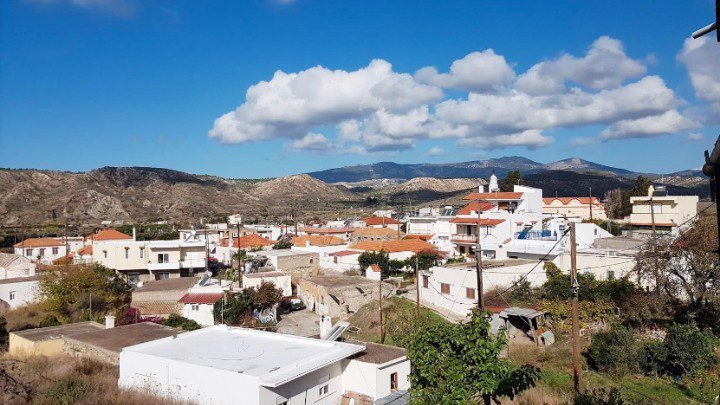
The Apolakkia (Απολακκιά) is a traditional, rural village on the southern side of the island of Rhodes, in the South Aegean Region. The village is built on a beautiful, natural plain between hills, at an altitude of about 50 meters, and is about 78 km from the city of Rhodes and 37 km from Lindos. Its location in a small "valley" also explains the origin of its name, which is related to the word “pit” (λάκκος).
The village maintains a quiet and traditional character, with the central square being a meeting point for residents and visitors. There is also an old Italian building with distinctive architecture, which today functions as a cultural center(the school), as well as small family taverns offering traditional Greek cuisine.
Agriculture is the main activity of the area, with olive trees, watermelons and other crops to dominate the landscape. In particular, watermelon production has established Apolakkia as one of the important agricultural settlements of southern Rhodes.
In the surrounding area there is also the Apolakkia dam, which created an artificial lake. This lake has been transformed into an important wetland with rich flora and fauna, and is a popular place for walking, relaxation and gentle activities close to nature.
Apolakkia is located in southern Rhodes, built in a natural valley between two low hills. This particular relief shapes the character of the village and is connected to the origin of its name. Although it maintains a purely rural and peaceful character, the village is located a short distance from the sea and important settlements in the area.
The valley and surrounding hills create a landscape suitable for cultivation, with olive groves and agricultural lands that have long been the basis of local life. At the same time, the location of Apolakkia functions as a natural link between the interior of southern Rhodes and the coastal areas.
Apolakkia is characterized by Mediterranean climate, with hot and dry summers and mild winters. The sea currents of southern Rhodes often offer a cool breeze, creating pleasant conditions for the daily life of the village.
An important element of the landscape is the Apolakkia Dam, which was constructed for the collection and management of the area's water resources. The area around the dam has been developed into a point of natural interest and is part of the environmental character of the village.
The environment of Apolakkia combines agricultural lands, olive groves and Mediterranean vegetation, forming a tranquil natural landscape that has accompanied the life of the village throughout time.
The wider area of southern Rhodes, to which Apolakkia also belongs, is historically part of the area of Doric installations that shaped the island since antiquity. Nearby centers, such as ancient Lindos, were important centers of civilization, while the fertile inland areas favored the development of rural settlements and crops.
During the early Christian and Byzantine periods, the area experienced intense religious activity. In the wider area of Apolakkia, remains of early Christian basilicas from the 6th century, which testify to the transition from ancient worship to the Christian tradition and the continuity of habitation in the same geographical area.
In the medieval period, southern Rhodes passed under the administration of the Knights of Saint John. During this period, the organization of the countryside and the protection of rural areas were strengthened, while churches and small ecclesiastical monuments in the area preserved the Byzantine tradition, despite Western influences.
After the Ottoman conquest in the 16th century, Apolakkia evolved into a rural village, preserving its Orthodox character and the continuity of local religious and social structures.
During the 19th century, in the last years of the Ottoman period, Apolakkia developed as a rural settlement in southern Rhodes, mainly based on the cultivation of olive trees and other local products. Village life was organized around the land, the church and family structures.
During the Italian administration of Rhodes (1912–1947), infrastructure projects were carried out to improve the connection of the remote villages of southern Rhodes with the central points of the island. In Apolakkia, the Italians construct the characteristic building of the central square, which was an important administrative point of the time. In the years that followed, the building was used successively as a police station, a school and a place for celebrations and gatherings of the village. Today it remains a point of reference and hosts cultural activities of the community.
After World War II and the incorporation of the Dodecanese into Greece in 1948, Apolakkia was officially recognized as a community and incorporated into the administrative and social structure of the Greek state, maintaining its rural and peaceful character.
An important project for the region was the construction of the Apolakkia Dam at the end of the 20th century, with the aim of collecting and managing water resources for the irrigation of crops in southern Rhodes. The area around the dam has become an element of natural interest for the wider area.
In recent years, Apolakkia has remained a vibrant rural settlement, combining daily village life with mild forms of tourism, preserving local identity and social cohesion.
According to the latest census, Apolakkia numbers a little more than 400 permanent residentsAs is the case in many villages of southern Rhodes, the population has fluctuated in recent decades, influenced by migration to urban centers and changing lifestyles.
The community is mainly made up of local families, with strong intergenerational ties. Daily life remains tied to agricultural activity, the church and the village's social events, which act as key meeting points.
At the same time, during the summer months, many Apolakkiates who live outside the village return, while a small number of visitors and friends of the area add seasonal vitality without altering the character of the community.
Apolakkia maintains close relations with the neighboring villages of southern Rhodes (Arnitha, Monolitho, Istrio, Gennadi, Vati, Kattavia, etc.), through joint agricultural activities, social contacts and local events.
The economic life of Apolakkia has been based on agriculture throughout history. Olive groves, watermelons and other crops constitute the main core of local production., shaping the rural character of the village. The Apolakkia Dam was constructed to enhance the irrigation of crops and remains an important project for the management of the region's water resources.
At the same time, in recent years there has been a slight increase in visitor numbers, mainly in the summer months, thanks to the natural beauty of the area and the beach of Limni. Local businesses remain small-scale and family-run, without altering the character of the village.
Apolakkia is connected by road to the other villages and central points of Rhodes, which allows residents to commute daily to larger settlements for work, education and services. The village's basic infrastructure covers the needs of the community, while for specialized services, residents mainly turn to Gennadi, Lindos and the city of Rhodes.
Apolakkia has points of natural and historical interest that are directly linked to the identity of the village and the lives of its residents.
In the center of the village, the square remains the center of social life. There are traditional shops and the characteristic Italian building that today hosts cultural activities and events of the village.
The beach of Limni It has been a point of reference for the village throughout time. It is a place for summer meetings, relaxation and events, while the wider area maintains its natural character and is protected as an important coastal ecosystem.
In the wider area there are also Early Christian and Byzantine monuments, such as the remains of Agia Irini and the chapel of Agios Georgios of Vardas, which testify to the long religious and historical continuity of the place.
The Apolakkia Dam It is a modern infrastructure project that has been integrated into the natural landscape of the area, creating a space for walking and contact with nature.
On the road to the Dam is located the chapel of Agios Efstathios, a favorite meeting place for residents and visitors. The area around the chapel stands out for its natural beauty, flowers and outdoor barbecues, making it a place for relaxation and social interaction. Every September, the traditional festival of Agios Efstathios is organized, which brings together people from all over the region. At the same time, during the summer months, the young people of the village choose the area for small summer gatherings and musical evenings, keeping the modern social life of Apolakkia alive.
On the road to Monolithos is located the chapel of Saint George, one of the most beloved spots in the area. Every year, on the feast of the Saint, the place fills with people for the traditional festival, with food, music and a meeting of residents and friends of the village.
The spot stands out particularly for its sunset, which stretches over the sea and the horizon of southern Rhodes. Many consider it one of the most beautiful sunsets on the island. — and many rank it among the most impressive places in the world. It is a place that combines faith, tradition and natural beauty, and remains deeply connected to the life of Apolakkia.
The cultural life of Apolakkia remains closely tied to the village's rural roots and Orthodox tradition. The square is the daily meeting point for residents and visitors, where coffee, food and conversation keep the social fabric of the community alive.
Celebrations and festivals play a central role, combining religious tradition with collective entertainment. A special place is occupied by The Watermelon Festival, which has become an established summer institution and highlights one of the most characteristic products of the region. At the same time, the festivals of Agia Marina, Agios Georgios and Agios Efstathios maintain the continuity of local customs and bring together people of all ages.
Local cuisine, based on local and daily produce, accompanies every social gathering and event. Family taverns and outdoor hospitality spaces function as spaces of hospitality, communication and tradition.
Of particular importance is the participation of young people, who through modern actions, small summer gatherings and voluntary contributions, give continuity to the life of the village, connecting the past with the present.
Our Approach
We focus on highlighting local traditions and cultural heritage, united in preserving the identity of the village.
Send
Our mission is to preserve and promote the local cultural heritage of Apolakkia.
Dream
We see a vibrant community, appreciating and promoting its cultural heritage for future generations.
Core Values
We are committed to solidarity, tradition and unity, in order to ensure a sustainable and rich cultural heritage.