A Summary from Michalis Thomas’s book on Apolakkia
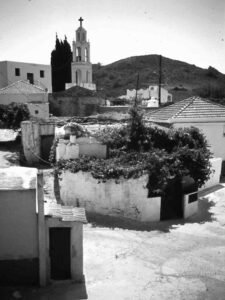
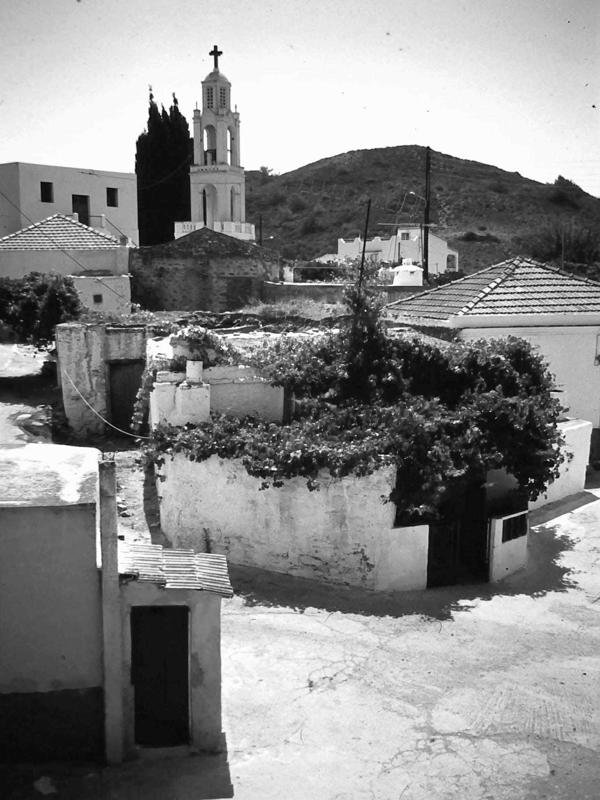
The village of Apolakkia is built on the slope of a small hill, on the top of which there are the ruins of a knight's castle. It is unknown when the village was built. However, it must have been built on an ancient komis, which, due to its location in the middle of a fertile plain, absorbed the surrounding settlements that were scattered in the area.
For the name Apolakkia, those who have dealt with the nomenclature of the villages of Rhodes, give its explanation through the compound word apo-lakkos itself, a potholed place surrounded by mountains. The village of Apolakkia is located in the southwestern part of the island at a distance of approximately 80 km from the city of Rhodes, with which it communicates via the provincial road of Rhodes-Empona-Monolithos, when following the north-western coasts, and via Rhodes-Gennadiou-Vati, which is the shortest distance, when following the south-eastern coasts.
A characteristic and beautiful building is that of the Primary School in the village square. The building was built during the Italian occupation as a police station. After the Liberation, internal reforms were made and it was converted into a school, which unfortunately today, due to internal migration to the city of Rhodes, remains closed.
Apolakkia is one of the most productive villages of Rhodes. The current agricultural exploitation is characterized by extensive cultivation of wheat and olive trees, and by irrigated areas with the main product being watermelon and melon. Potatoes, tomatoes and other vegetables follow. Livestock farming is limited. There are free-range goats raised by foreign farmers seasonally. The Fournoi region has marine and non-marine habitats, which in addition to turtles and seals also include 40 species of endemic birds, 14 species of protected reptiles, 45 species of endemic invertebrates, and a rare species of bat. In the marine zone, the presence of the “Caretta-Caretta” turtle and the Mediterranean “Monachus-Monachus” seal has been observed. It is an area of natural beauty that has remained far from the destructive effects of modern development. The steep Louroi rocks, high landslides, are visible from afar and give the landscape something special and impressive.
The artificial lake of Fragma (The Dam) has been transformed into an important bird habitat. Rare water birds nest and reproduce on the shores of the lake. The aquatic environment of the lake is now a natural habitat for many fish.
Festivals, engagements and weddings were for the villagers an opportunity for feasting and entertainment. But also the “Hairetia” the name festivals, dances and festivals, were the reasons that people looked for to sing, dance, drink, be merry, and generally escape from the tiring everyday life. The "posperismata" for women and the kafenes for men were the daily entertainment of the people of the village.